








Running a business becomes increasingly difficult when sales, accounting, inventory, and customer information are managed through disconnected systems. As companies grow, manual processes create delays, reporting inaccuracies, and unnecessary administrative work. This is why more business owners are exploring ERP solutions such as Odoo. However, switching to a new system is a major operational decision that requires careful evaluation. Understanding Odoo Middle East capabilities, implementation costs, and UAE regulatory requirements can help businesses determine whether the platform meets their needs. For companies considering an ERP transition, Fixels Media, an experienced ERP software development company in Dubai, provides implementation, customization, and integration services. Before making the switch, businesses should understand what Odoo offers, where additional investment may be necessary, and how to prepare for a successful transition.
What Is Odoo and How Does It Work for Businesses in the Middle East?
Odoo is an enterprise resource planning platform that connects different business operations through a collection of integrated applications. Instead of managing accounting, sales, inventory, and customer information using separate tools, businesses can operate these functions within a shared environment. For example, a confirmed sales order can be connected to inventory records, invoicing, and customer information, depending on the configured workflow. This reduces the need to transfer the same information manually between departments. Odoo software supports businesses operating in different industries, including retail, distribution, manufacturing, and professional services. However, successful implementation depends on selecting suitable modules and configuring them around existing processes. The platform's flexibility is valuable, but it also makes proper planning an essential part of adoption.
Why Are UAE Businesses Switching to Odoo Software?
Many UAE businesses begin with spreadsheets or individual software applications that work reasonably well during their early stages. Problems often appear when transaction volumes increase, departments expand, or management needs more accurate reporting. Employees may spend considerable time updating records, reconciling information, and correcting mistakes between systems. Odoo offers an alternative by connecting important workflows and making business information more accessible. Companies may also consider switching when their existing software cannot support additional locations, complex inventory requirements, or changing operational processes. However, moving to an ERP platform should address identifiable problems rather than simply follow a technology trend. Businesses should evaluate how much time is lost through manual work, where errors occur, and whether an integrated system can deliver meaningful improvements.
Key Odoo Features and Business Modules You Should Understand
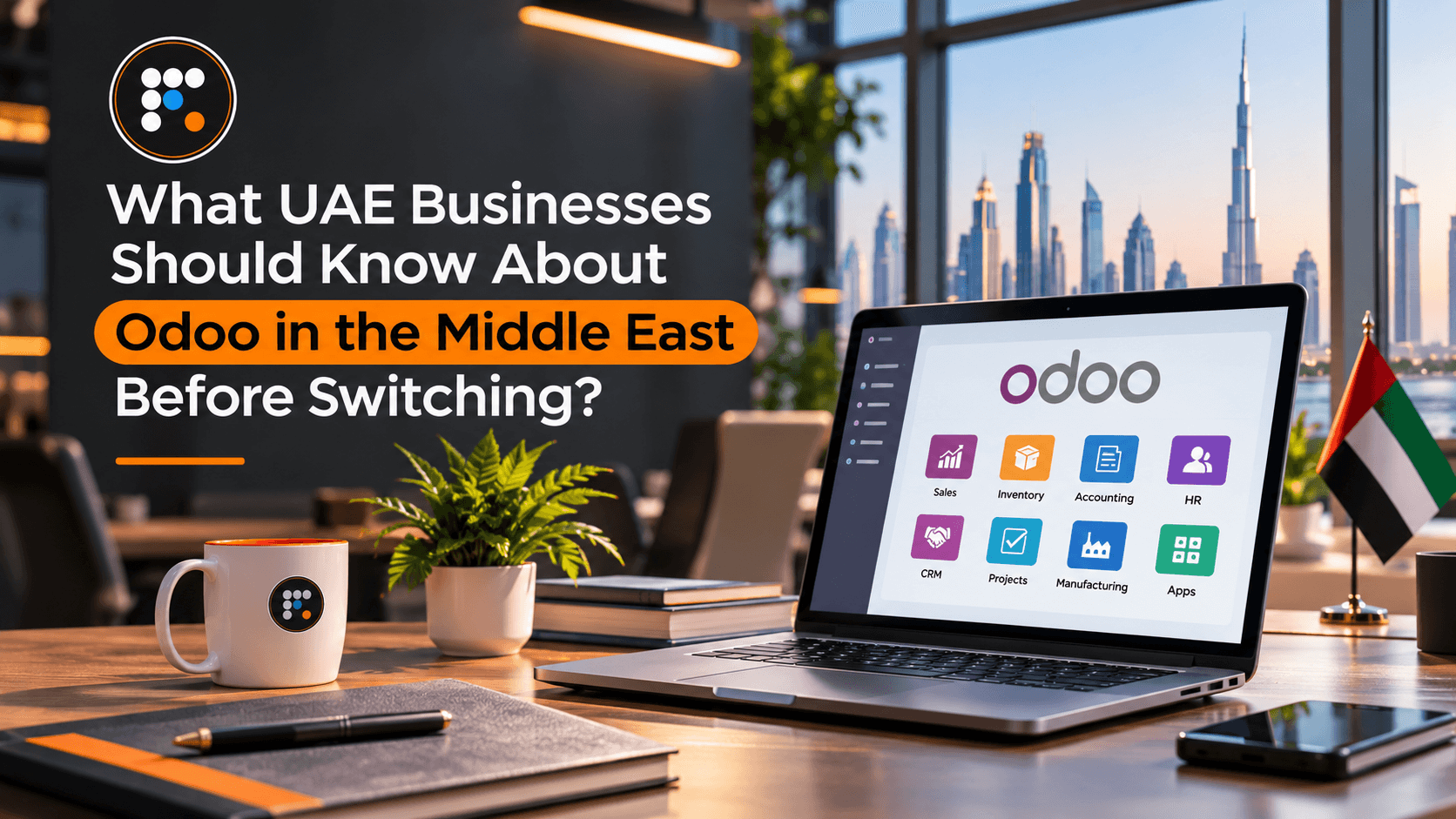
Odoo includes applications designed to support different areas of business management. Its accounting functionality helps manage invoices, payments, financial records, and reporting. Customer relationship management tools organize sales opportunities and customer interactions, while inventory applications support stock movement, warehouse operations, and product availability. Additional modules cover purchasing, manufacturing, project management, human resources, ecommerce, and point of sale activities. One advantage of this modular structure is that businesses can implement the applications they actually require. However, not every module needs to be introduced at the same time. Starting with the most important operational requirements can make implementation easier to manage. Businesses should evaluate how selected applications share information and whether those workflows match their existing responsibilities.
Is Odoo Suitable for Small and Mid Sized Businesses in the UAE?
Odoo can support smaller businesses as well as larger organizations, but suitability depends on operational complexity rather than company size alone. A business managing a limited number of transactions may not need a comprehensive ERP implementation. However, a growing company with multiple departments, warehouses, or customer management requirements may benefit from connected applications. The important question is whether the expected improvements justify the investment in software, implementation, and training. Businesses should consider current administrative costs, reporting difficulties, and future operational requirements before deciding. For a broader explanation of ERP adoption, read Is ERP Software Worth It for Small and Mid-Sized UAE Businesses?. Evaluating these factors helps owners determine whether to implement selected modules gradually or undertake a more extensive transition.
Understanding Odoo Pricing, Licensing, and Implementation Costs
Odoo pricing depends on the selected subscription, number of users, hosting arrangement, and required functionality. Its official pricing structure includes a free single application option alongside paid Standard and Custom plans. The Standard plan supports access to business applications through online hosting, while the Custom plan provides additional capabilities such as advanced customization and external API access. Subscription fees, however, represent only part of the total investment. Businesses may also need to budget for requirements analysis, data migration, module configuration, custom development, integrations, testing, and employee training. Certain deployment arrangements can involve additional hosting expenses. UAE businesses should request a detailed implementation quotation that separates licensing from professional services. Comparing total ownership costs provides a clearer understanding of the financial commitment.
UAE VAT, E Invoicing, and Local Compliance Requirements
Regulatory compliance is one of the most important considerations when implementing Odoo in the UAE. The platform provides UAE accounting localization features, including a localized chart of accounts, VAT configuration, and financial reporting tools. The country's standard VAT rate is 5%, although businesses must also account for transactions subject to zero rates, exemptions, or other applicable treatments. Electronic invoicing introduces additional responsibilities. Under the UAE's phased implementation framework, in-scope businesses with annual revenue of AED 50 million or more must implement electronic invoicing from 1 January 2027, while smaller in-scope businesses follow from 1 July 2027. Structured electronic invoicing requires more than generating PDF invoices. Companies should verify their integration with an accredited service provider and confirm that their configuration meets applicable requirements.
Odoo Community vs Enterprise: Which Version Should You Choose?
Odoo offers Community and Enterprise editions, each with different capabilities and support arrangements. Community is an open source edition that businesses can use without Enterprise subscription licensing. However, deployment, technical maintenance, hosting, and custom development may still involve expenses. Enterprise provides additional functionality, official support, and access to commercial subscription arrangements. Businesses should not confuse Community with the separately advertised One App Free hosted plan. Selecting the appropriate edition requires evaluating required modules, available technical resources, customization needs, and long term maintenance responsibilities. A company with straightforward workflows and internal technical expertise may assess Community differently from an organization requiring broader functionality and managed support. The decision should be based on operational requirements and total cost rather than licensing fees alone.
Common Challenges Businesses Face When Switching to Odoo
ERP implementation can become difficult when businesses underestimate the changes required across their operations. Employees may be accustomed to existing workflows, even when those processes are inefficient. Introducing new software without sufficient training can create confusion, incomplete records, and resistance to adoption. Another challenge is attempting to reproduce every outdated process through customization instead of evaluating whether it remains necessary. Inaccurate historical data and unclear departmental responsibilities can also delay implementation. Businesses experiencing these difficulties may already recognize some of the warning signs discussed in Signs Your Business Has Outgrown Its Current Tech Setup. A successful transition requires management involvement, realistic timelines, clear responsibilities, and adequate testing before the new system becomes the primary operating platform.
Data Migration, Customization, and Integration Considerations
Moving from an existing business system to Odoo involves more than exporting and importing records. Companies should review their customer information, supplier details, product lists, financial balances, and historical transactions before migration. Duplicate entries, incomplete records, or inconsistent classifications can affect reporting accuracy after the transition. Odoo supports data imports through common formats such as CSV and Excel, but files must be mapped and validated correctly. Businesses should also identify integrations involving payment processing, ecommerce, banking, logistics, or other essential applications. Customization may be necessary when standard functionality cannot accommodate important business requirements. However, excessive modifications can increase maintenance costs and complicate future upgrades. Testing critical workflows before launch helps identify problems while the existing system remains available.
How to Choose the Right Odoo Implementation Partner in Dubai?
Choosing an implementation partner is as important as selecting the ERP platform itself. Businesses should look for technical experience, a clear requirements analysis process, and an understanding of UAE accounting and operational needs. A qualified partner should explain which modules are appropriate, how existing data will be transferred, and whether custom integrations are necessary. The proposal should also define responsibilities, project milestones, testing procedures, training arrangements, and post implementation support. Companies should ask about previous ERP projects and request explanations of how implementation challenges were handled. Local regulatory understanding is particularly important for accounting, VAT, and electronic invoicing requirements. A reliable implementation partner should focus on developing a workable business system rather than recommending unnecessary features or promising immediate results.
Important Questions to Ask Before Switching to Odoo ERP
Before committing to Odoo, business owners should evaluate several practical questions. Which operational problems will the new system solve? What information must be migrated from existing applications? Which departments require immediate access, and which modules can be introduced later? Businesses should also clarify whether their proposed subscription supports necessary integrations and customizations. Financial planning should account for implementation fees, subscription renewals, employee training, and ongoing technical support. Regulatory requirements should be reviewed with qualified professionals, particularly where accounting and electronic invoicing are involved. Finally, companies should establish how system performance will be evaluated after deployment. Clear answers help determine whether the proposed implementation supports realistic business objectives and provides a foundation for future operational improvements.
Conclusion:
Odoo offers UAE businesses an opportunity to connect operations, improve information visibility, and reduce reliance on disconnected applications. However, the platform is not automatically the right solution for every organization. Successful implementation depends on understanding business requirements, selecting appropriate modules, preparing accurate data, and evaluating the total investment involved. UAE VAT and electronic invoicing obligations also make local compliance an essential consideration. Businesses researching Odoo Middle East solutions should compare functionality, licensing, customization, and ongoing support before making a decision. A carefully planned transition can help companies establish more efficient processes while avoiding unnecessary technical complications. Ultimately, the best ERP investment is one that supports the way a business operates today while remaining practical for its future growth.