








Choosing the right ERP software can make a significant difference in how efficiently a business operates. As companies grow, managing finances, inventory, sales, and daily operations through disconnected systems becomes increasingly difficult. Microsoft Dynamics 365 offers a range of business applications designed to connect these processes, but is it the right choice for every organization? The answer depends on your company's requirements, existing technology, and available budget. Businesses exploring ERP solutions can consult an experienced ERP software development company in Dubai, such as Fixels Media, to assess their operational needs. This guide examines Dynamics 365 features, applications, pricing, implementation requirements, and suitability for businesses in Dubai and across the UAE.
What Is Microsoft Dynamics 365 and How Does It Work?
Microsoft Dynamics 365 is a collection of business applications designed to help organizations manage financial, operational, and customer-related activities. Instead of relying on separate applications for every department, businesses can use connected systems to improve data visibility and coordinate everyday processes. The platform includes ERP applications for accounting, purchasing, inventory, manufacturing, and financial management, alongside applications focused on customer relationships and sales. However, Dynamics 365 is not a single product that provides every capability automatically. Businesses choose applications and licensing arrangements based on their requirements. Understanding this distinction is important because the functionality, implementation complexity, and ongoing costs can differ considerably between configurations.
Understanding Business Central, Finance, and Supply Chain Management
Three important Dynamics 365 applications serve different business requirements. Business Central is designed primarily for small and medium-sized organizations that need connected financial management, purchasing, sales, inventory, and other core operations. Dynamics 365 Finance supports more extensive financial processes, including advanced reporting, financial controls, and complex organizational structures. Supply Chain Management focuses on procurement, warehouse operations, inventory, manufacturing, and supply chain coordination. These applications should not be treated as interchangeable solutions. A growing trading company may find Business Central sufficient, while an organization managing complicated financial or production requirements may need more specialized capabilities. Selecting the appropriate application begins with identifying what the business actually needs to manage.
Signs Your Business May Need a More Advanced ERP System
Not every business needs advanced ERP software immediately. However, certain operational problems can indicate that existing systems are becoming difficult to manage. Employees may repeatedly enter the same information into different applications, inventory figures may not match actual stock, or financial reports may take too long to prepare. Communication between sales, purchasing, and accounting can also become unreliable when departments maintain separate records. These issues often become more noticeable as transaction volumes increase. If your organization is experiencing similar challenges, Signs Your Business Has Outgrown Its Current Tech Setup provides further insight. Before implementing a new ERP system, identify the underlying problems and determine whether better integration, process improvements, or a complete platform change would solve them.
Which Businesses Are Best Suited for Microsoft Dynamics 365?
The suitability of Microsoft Dynamics 365 depends more on operational complexity than company size alone. A small business with straightforward accounting and limited inventory requirements may not need an extensive ERP implementation. However, a growing distributor managing multiple warehouses, purchasing activities, and financial records may benefit from a connected platform. Larger organizations often require stronger reporting controls, sophisticated approval processes, and coordination across business units. Dynamics 365 offers different applications to address these requirements, but choosing an unnecessarily complex configuration can increase implementation costs and employee training demands. Businesses should evaluate their existing processes, transaction volumes, reporting needs, and expected growth before deciding whether the platform offers sufficient value.
Key Microsoft Dynamics 365 Features and Business Benefits
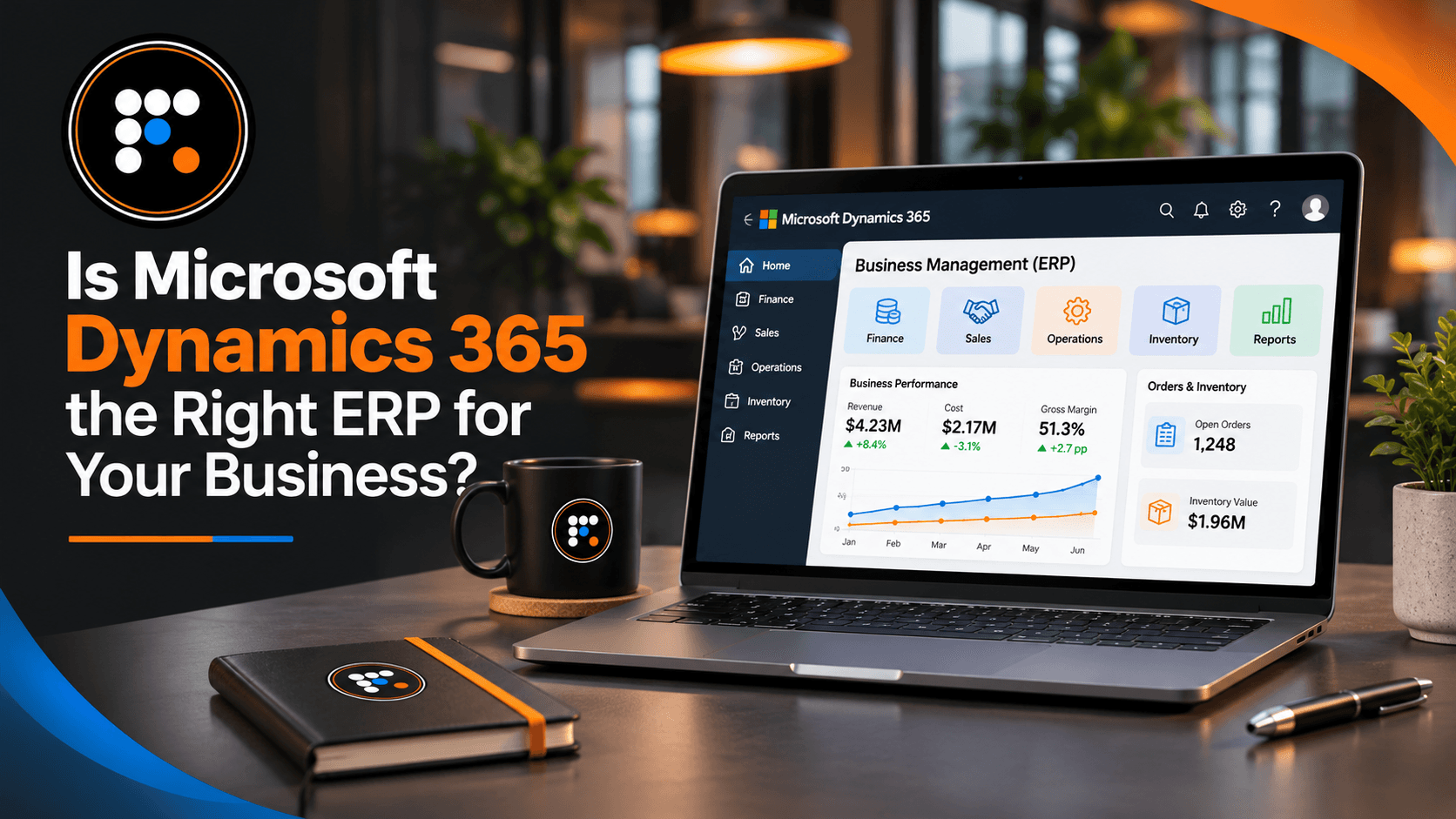
One of the main advantages of Microsoft Dynamics 365 is its ability to connect information across relevant business functions. Financial management features can support accounting processes, budgeting, and reporting, while inventory and purchasing capabilities help businesses monitor stock movements and supplier transactions. Depending on the selected application, workflow automation can reduce repetitive administrative activities, and reporting tools can make operational information easier to access. Manufacturing and warehouse management capabilities are also available in appropriate configurations. However, features differ between applications and licensing plans. Businesses should prioritize functionality that addresses their actual challenges rather than assuming every available feature will improve performance. A useful demonstration should show how the system handles everyday tasks.
Integration, Customization, and Scalability: What Should You Expect?
An ERP system must work with the processes and applications a business already depends on. Microsoft Dynamics 365 offers integration and customization capabilities, but these require careful planning. Companies may need to connect existing websites, financial applications, reporting tools, or industry-specific systems. Data migration also deserves attention because incomplete customer records, inaccurate inventory information, or inconsistent financial data can create problems after implementation. Customization may be necessary for specialized workflows, although excessive modifications can increase costs and complicate future updates. A practical approach is to evaluate standard functionality first and customize only where a genuine business requirement exists. Scalability should also be assessed against realistic plans for additional users, departments, and transactions.
How Much Does Microsoft Dynamics 365 Cost to Implement and Maintain?
The cost of Microsoft Dynamics 365 depends on the applications selected, the number and type of licences required, and the complexity of implementation. Published U.S. list prices have included approximately $80 per user per month for Business Central Essentials and $110 for Premium, under annual payment terms. These are reference figures rather than guaranteed UAE prices, and current local quotations should always be verified. Licensing is also only part of the investment. Businesses may need to budget for implementation, configuration, integrations, data migration, customization, employee training, and ongoing support. Comparing the expected total cost over three to five years provides a more realistic financial picture than focusing exclusively on monthly subscription charges.
Is Microsoft Dynamics 365 Suitable for Businesses in Dubai and the UAE?
Microsoft Dynamics 365 can support UAE businesses, but suitability depends on the selected application and its local configuration. Companies must consider VAT reporting, financial recordkeeping, data protection, and applicable electronic invoicing requirements. The UAE's mandatory VAT registration threshold is AED 375,000 in taxable supplies and imports, subject to the relevant conditions. The country's phased electronic invoicing requirements begin in January 2027 for certain larger businesses, followed by additional businesses in July 2027. Since compliant electronic invoices require structured data, generating ordinary PDF invoices is not sufficient on its own. Businesses should confirm whether their proposed Dynamics 365 configuration supports the necessary localization, tax processes, and integration with an accredited e-invoicing service provider where required.
Microsoft Dynamics 365 vs Other ERP Systems: What Should You Compare?
Comparing ERP platforms should begin with business requirements rather than software popularity. Microsoft Dynamics 365 offers substantial functionality, but another solution may be more suitable if a company has simpler processes, limited resources, or specialized requirements. Businesses should assess essential features, integration capabilities, ease of use, customization needs, implementation timelines, and ongoing costs. Industry requirements also matter because manufacturing, retail, distribution, and professional services companies often operate differently. For businesses still deciding whether a full ERP investment is necessary, Is ERP Software Worth It for Small and Mid-Sized UAE Businesses? provides useful context. The strongest decision comes from comparing realistic workflows and long-term requirements rather than choosing the platform with the longest feature list.
How to Choose the Right ERP Implementation Partner in Dubai
Even capable ERP software can underperform when implementation is poorly planned. Businesses comparing ERP companies in Dubai should evaluate each provider's understanding of their operations, technical requirements, and expected outcomes. Relevant experience with the exact Dynamics 365 applications being considered is particularly important. An implementation partner should explain how requirements will be documented, data will be migrated, integrations will be tested, and employees will be trained. Businesses should also request clear information about timelines, project responsibilities, ongoing support, and potential additional costs. Rather than accepting a general demonstration, ask the provider to explain how the proposed solution will handle your actual business processes. A structured implementation plan reduces uncertainty and helps establish realistic expectations.
Conclusion:
Microsoft Dynamics 365 can be a valuable investment for organizations that need connected financial processes, better inventory visibility, and more coordinated business operations. However, its suitability depends on choosing the correct applications and understanding the full implementation requirements. Businesses with relatively simple operations may find that a less complex solution meets their needs, while growing organizations can benefit from more comprehensive ERP capabilities. Before making a decision, evaluate your workflows, integration requirements, available budget, employee readiness, and applicable UAE compliance obligations. The right ERP system should solve existing operational problems while remaining practical to maintain. Ultimately, the best choice is software that supports how your business works today and where it needs to go tomorrow.