



Choosing a development partner used to be a procurement decision. In 2026 it is closer to a product decision, because the gap between a competent build and a great one now shows up in retention numbers within the first month. The market is expanding fast, the tooling has changed underneath everyone, and the agencies that understood that shift early are pulling away from the rest. If you are weighing options for an upcoming build, working with an experienced Mobile App Development Company is the difference between launching a product and launching one that survives its first quarter. This guide breaks down what separates the leaders, which kinds of firms are worth watching this year, and how to run a shortlist properly.
Why 2026 Is a Turning Point for Mobile App Development
The numbers explain the urgency. The global mobile app market is projected at around $378 billion in 2026, and on the services side, the mobile app development market was valued at $302.1 billion in 2025 and is expected to grow from $338.65 billion in 2026 to $844.5 billion by 2034, a compound annual growth rate of 12.1%. Spending is rising, but so is the failure rate. Day-1 retention averages around 24% and falls to roughly 5 to 6% by day 30, which means about 94% of new users churn inside a month. AppsFlyer’s 2025 uninstall report found that approximately 46.1% of Android apps were removed within 30 days. A bigger market with a harsher survival rate is exactly the condition where partner selection stops being a formality and starts determining outcomes.
What Separates the Best Mobile App Development Company from the Rest
Technical Depth Beyond a Single Framework
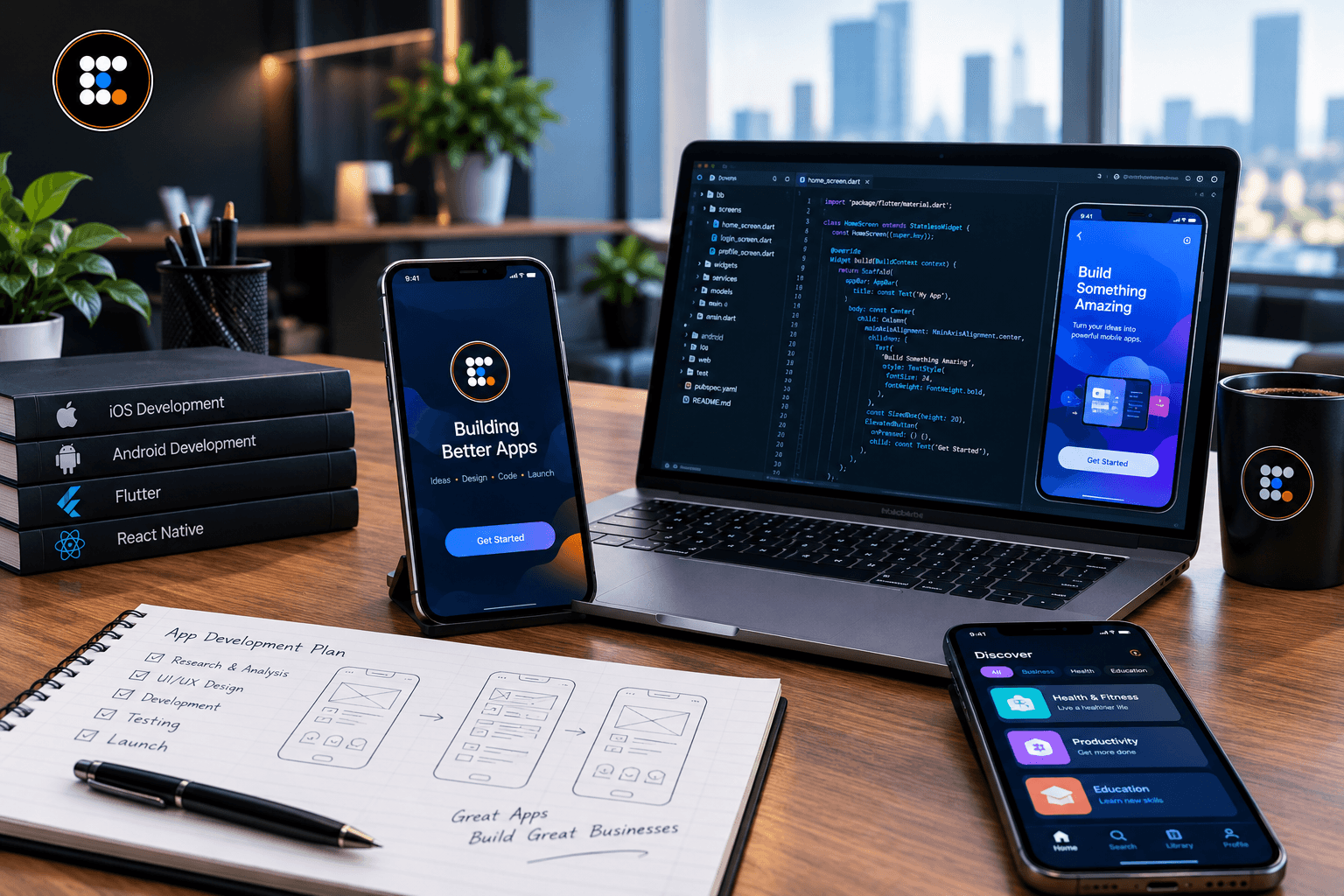
Agencies that only sell one stack tend to recommend that stack for every brief. The strongest teams in 2026 make a reasoned choice instead. Flutter holds roughly 46% cross-platform developer adoption, React Native sits at 42% among enterprise teams, and together the two power over 80% of the cross-platform market. Kotlin Multiplatform has become the notable third option because it shares business logic, networking and data layers while keeping the UI native on each platform. A capable mobile app development company should be able to explain, in plain terms, why your particular product belongs on one of these rather than another, and where a native module still earns its place.
Product Thinking, Not Just Code Delivery
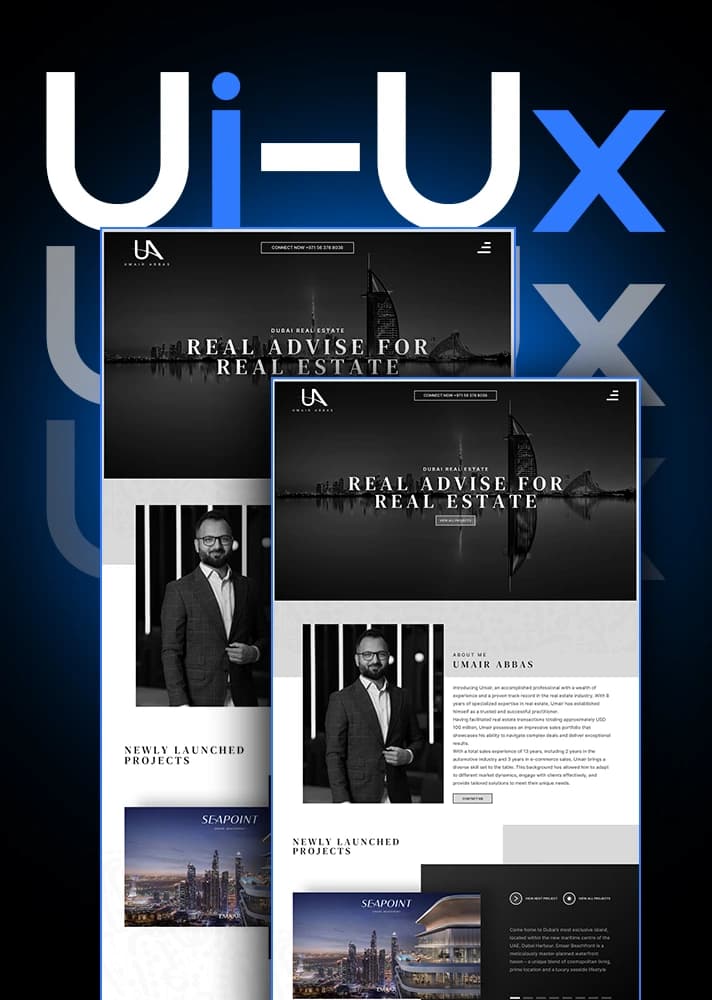
Most apps do not fail because the engineering was weak. They fail because nobody pressure tested the idea before the sprint plan was written. Strong partners run market validation, competitor research and product-market fit checks before development begins, and they treat onboarding as a feature rather than a formality. Given how quickly users disappear, the first session is where the commercial case is won or lost. When you review portfolios, look past the screenshots and ask what each product does today, how many active users it holds, and what changed between version one and version four. Firms with real product instinct answer that easily. Firms selling hours usually cannot.
Post-Launch Support and Scalability
Launch is the cheapest part of the lifecycle. Annual maintenance commonly runs 15 to 20% of the original development cost, and hidden costs including maintenance, hosting, app store fees and project management overhead can add 30 to 50% to an initial budget. Store compliance adds further pressure. Apple reviewed 7.7 million App Store submissions in 2024 and rejected more than 1.9 million, while Google blocked 2.36 million policy-violating apps from Google Play. The best partners price maintenance transparently from the first proposal, hand over clean documentation and repository access, and keep an engineer who knows your codebase available after handover.
Mobile App Development Companies to Watch in 2026
The Full-Stack Product Partners
These are mid to large firms that own strategy, design, engineering, QA and release management under one roof. Their advantage is accountability, because there is no vendor boundary to hide behind when a release slips. They tend to suit regulated and complex builds, where compliance-heavy fintech and healthcare projects can cost 20 to 30% more than equivalent unregulated products. Watch for the ones investing in internal design systems and CI/CD maturity rather than headcount alone, since that is what keeps their delivery speed stable as a product grows past its first year.
The AI-Native Specialist Studios
A second group has rebuilt its entire practice around intelligence as infrastructure. Roughly 40% of enterprise apps are expected to run task-specific agents by the end of 2026, up from under 5% in 2025, and AI adoption among developers has already reached 84%. These studios are small, expensive and genuinely differentiated. They are the right call when the intelligence layer is the product rather than a feature bolted onto a standard CRUD app.
The Region-Fluent Growth Agencies
The third group combines engineering with market execution, which matters when launch and acquisition are the hard part. Fixels Media sits in this category, working across Karachi and Dubai on builds where the app, the brand and the campaign that fills it are handled by the same team. For founders entering the Gulf, local market fluency around language, payment behaviour and regulatory detail is often worth more than a bigger engineering bench.
Best Mobile App Development Company in Dubai: Why the UAE Market Stands Out?
Dubai has become one of the most competitive places in the world to build, largely because policy has pulled demand forward. The UAE’s national digital economy is projected to reach $140 billion by 2031, up from around $38 billion, with its contribution to GDP rising from 9.7% to over 20%. Programmes including the UAE Digital Economy Strategy, the National AI Strategy 2031, the Dubai Economic Agenda D33 and Smart Dubai continue to drive mobile-first transformation across public and private sectors. The practical consequence is a user base with very high expectations. More than 200 government services are accessible exclusively through the UAE Pass digital identity app, and UAE digital commerce is projected to exceed USD 9 billion by 2026. Picking the best mobile app development company in Dubai therefore means weighing Arabic and English parity, data residency requirements and payment integrations alongside the usual engineering criteria.
How to Shortlist the Right Partner for Your Project
Run a structured process rather than a reference-led one. Ask three to five firms the same written brief and compare how differently they interpret it, because the quality of the questions you get back is the clearest signal available before a contract exists. Request a technical rationale for the proposed stack, a maintenance quote alongside the build quote, and a named team rather than a capability deck. Our guide on How to Choose the Right App Development Company in Dubai covers the regional specifics in more depth, including contract structures and compliance checkpoints. Benchmark pricing honestly too: simple apps typically cost $5,000 to $50,000 and medium-complexity apps $50,000 to $120,000, so a quote far below range usually signals scope that has not been read properly.
Red Flags to Watch For Before You Sign
Be cautious when a firm promises a fixed price before discovery, since that almost always converts into change requests later. Treat vague ownership language as a serious issue, because your contract should state clearly that source code, repositories and design files belong to you. Other warning signs include portfolios with no live store links, a refusal to name the engineers assigned to your project, and proposals that stop at launch with no maintenance plan attached. Finally, if nobody on the call challenges any part of your brief, you are being sold to rather than advised.
Final Thoughts
The strongest partners in 2026 are the ones that treat an app as a business system rather than a deliverable, and they prove it in how they handle retention, maintenance and compliance long after launch. Before you commit a budget, ask any shortlisted team what happened to its products in month six rather than week one. The answer will tell you more than any pitch deck, and it is the single fastest way to separate a genuine product partner from a development shop that simply ships screens.